
On this page
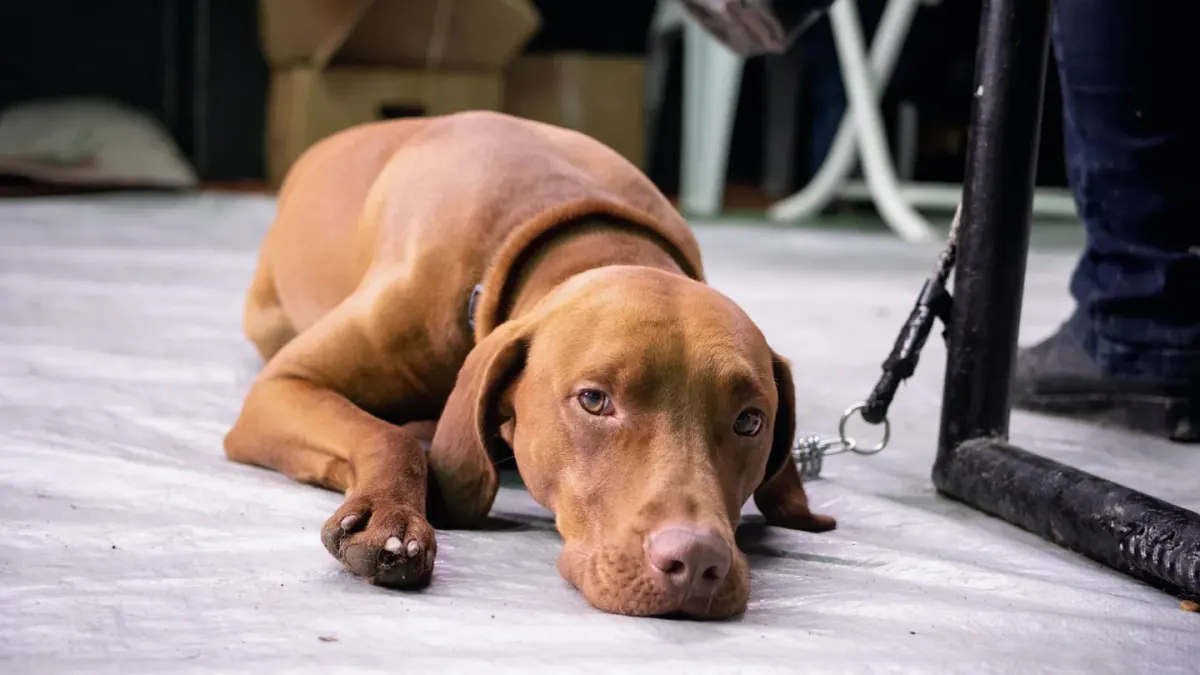
Elaine woke to Colt, her 6-year-old Boxer mix, asking to go out three times before sunrise in Buffalo, then refusing breakfast and bringing up yellow bile. That combination — watery stool from one end and vomiting from the other — changes the priority from finding the cause to measuring fluid loss.
Fluid leaves fast when both ends are active. Check gums, skin, and behavior before you reach for food or supplements.
Start With Fluids, Not Food
Withhold judgment for a minute and gather data. Note how many vomiting episodes and how many liquid stools in the last 6 hours, whether water stays down, and whether urine output has dropped.
Look at hydration in this order. Lift the lip: gums should be moist and pink, with color returning within two seconds after a gentle press. Pinch skin over the shoulders: it should fall flat at once. Note energy, panting, dry nose alone means little, and sunken eyes or marked lethargy mean more.
Offer small, frequent laps of water — a few tablespoons every 20 to 30 minutes for a medium dog — rather than a full bowl that may trigger more vomiting. If water returns within minutes, pause and plan to call the clinic. Diarrhea in Dogs outlines how quickly watery stool depletes fluids, and Vomiting in Dogs describes the matching risk when vomiting prevents replacement.
Do not push food, fiber, or probiotics while active vomiting continues.
Why Both Ends Erupt Together
Dietary indiscretion leads the list: trash, fatty scraps, a new chew, or a sudden food change. Infections, intestinal parasites, motion sickness layered on dietary upset, toxins, pancreatitis, heat-related illness, and obstruction can present the same way, so pattern matters more than any single episode.
Vets often see a middle-of-the-night pattern in house-call practice — a dog that scavenged during the day develops soft stool by evening, then vomits overnight on an empty stomach. Each dog responds on its own ground, so age, size, and history reset the threshold. A robust adult Labrador that vomits once and still drinks is a different picture from Pandora, a 2-year-old Maltipoo from Fairfield whose owner Gary counted four liquid stools and two vomits in five hours and noticed she would not play.
Bloody stool, coffee-ground vomit, abdominal swelling, repeated retching without production, suspected xylitol, grapes, rat bait, or medication ingestion point away from simple upset.
For context on bland fiber often discussed after these episodes, see Canned Pumpkin vs. Pumpkin Powder for Dog Diarrhea: What the Evidence Actually Supports and on heat as a compounding factor, Why a Senior Dog Seems More Tired in Summer Heat Than She Used To.
What To Do Hour By Hour At Home
Use this sequence only for an otherwise healthy adult dog with mild signs, no blood, no toxin exposure, and continued ability to keep small sips down.
Remove food for 6 to 8 hours while offering small sips. Rest the gut. Keep the dog quiet, indoors, and observed.
Track intake and output on paper. Time each vomit and stool. Note color, presence of blood or mucus, and any foreign material.
Reintroduce water in stages. If small sips stay down for 2 to 3 hours, allow slightly larger amounts. If vomiting recurs, stop and call the veterinarian.
Refeed bland and small once vomiting has paused for at least 6 hours and the dog asks for food. Offer a teaspoon to a tablespoon of a familiar bland meal, such as plain cooked white rice with plain boiled chicken breast, every 3 to 4 hours. Return to regular food gradually over 48 to 72 hours if stools firm.
Hold exercise, rich treats, dental chews, and new supplements until stools hold shape for a full day. Gentle fiber and balanced gut support may help support normal stool quality during recovery, and a balanced gut microbiome supports overall immune function, but they do not replace fluids or diagnosis.
When Waiting Becomes The Wrong Call
My working rule is direct: timing of reassessment matters more than any home remedy when liquid stool and vomiting occur together. Call the veterinarian the same day for most combinations, and sooner for higher-risk dogs.
Call now for repeated vomiting with inability to keep water down for 6 to 8 hours, blood in vomit or stool, black tarry stool, severe lethargy, abdominal pain or swelling, collapse, suspected toxin or foreign body, or dehydration signs that do not resolve. Puppies under 6 months, toy breeds, seniors, and dogs on diuretics, with kidney disease, diabetes, or Addison disease, dehydrate faster and should be seen earlier.
This watchful approach is the wrong call for those dogs. Do not attempt an overnight fast at home. Transport with a list of exposures, medications, onset times, and episode counts, plus a photo of stool if you can take one safely.
Recovery feeding stays food-first and plain. Once cleared by your veterinarian, keep meals small, low-fat, and consistent while the gut steadies.
Our Panel Read: Timing Beats Any Remedy
Evidence for any single supplement rescuing acute liquid diarrhea with vomiting is thin. Hydration assessment, toxin and obstruction screening, and early veterinary input carry the weight.
That is the verdict for this symptom pair. Judge fluids first, document the timeline, refeed only after vomiting pauses, and let a veterinarian set the next step when loss outpaces intake.
Frequently asked questions
How long can I watch liquid diarrhea and vomiting at home?
For a healthy adult dog with mild signs and water staying down, many veterinarians advise reassessment within 6 to 12 hours; call sooner for blood, pain, repeated vomiting, lethargy, or any dehydration signs.
Should I give pumpkin, probiotics, or electrolytes first?
Not while active vomiting continues; prioritize small sips of water, rest, and veterinary advice, then discuss bland refeeding and gut-support options once vomiting has paused.
What details help the vet most on the phone?
Age, weight, episode counts over the last 6 hours, whether water stays down, urine output, gum moisture, exposures, medications, and presence of blood, mucus, or foreign material.
Sources
- Diarrhea in Dogs — VCA Animal Hospitals
- Vomiting in Dogs — VCA Animal Hospitals