
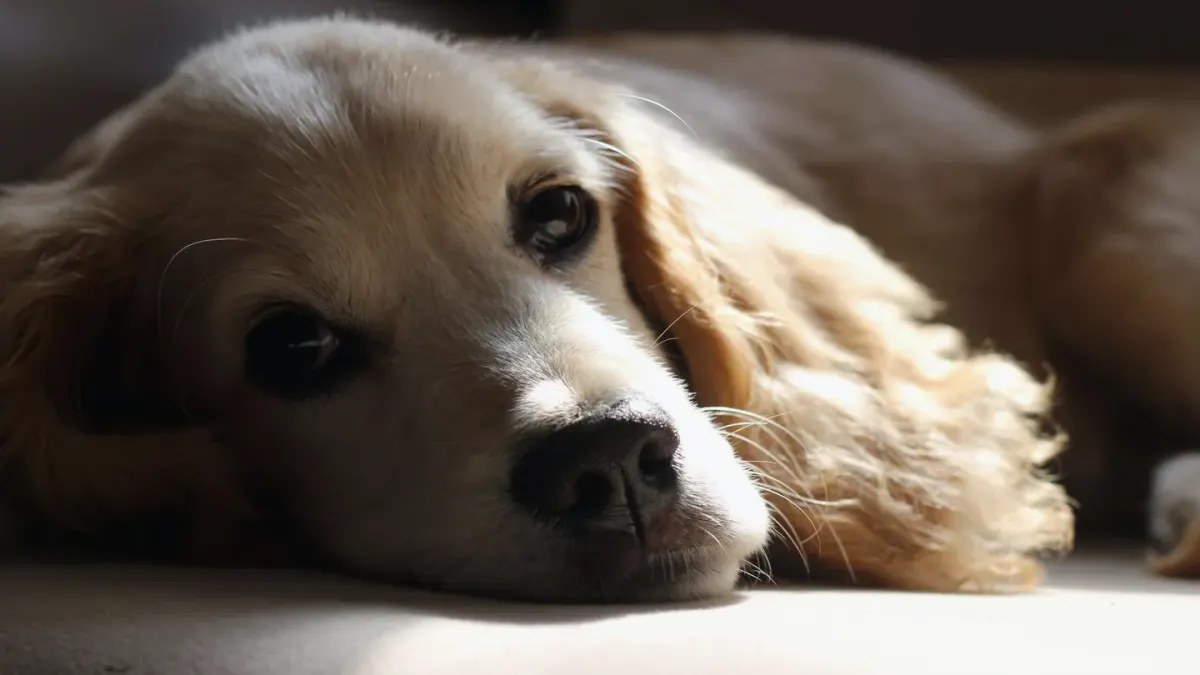
Sunday evening, the apartment buzzer sounds and a four-year-old, 42-pound cattle dog mix lifts her head from the rug. Her mouth closes, her ears rotate back, she licks her lips once, then yawns while turning her head away from the door. The owner laughs and says she is tired. In clinic terms, that sequence looks less like fatigue and more like early displacement behavior — normal circuits for conflict and arousal spilling into an unrelated motor pattern.
That distinction matters because stress in dogs is a pathway response, not a personality trait. Threat detection runs through amygdala and hypothalamic autonomic outflow, producing predictable changes in posture, facial tension, respiration, and movement before vocalization ever starts. If owners wait for barking, trembling, or destruction, they miss the earlier, quieter phase where intervention works best. My position is direct: learn the mechanism-ordered ladder from low-level appeasement to overt avoidance, and flag any claim that one yawn or shake equals a diagnosis.
What low-level stress looks like before it escalates
Low-grade arousal often appears in the face and mouth first. Lip licking without food present, brief yawning when the dog is not sleepy, half-moon eye with increased scleral show, ears pinned slightly back from neutral, and a closed, tense commissure all reflect heightened sympathetic tone. The dog may still accept treats and respond to cues, which fools owners into dismissing the signs.
A second cluster involves self-directed displacement: sudden sniffing of the ground on a sterile sidewalk, a scratch behind the ear with no itch, a full-body shake-off with no water present. These behaviors discharge motor activity when approach and avoidance pathways activate together. They support normal function by resetting arousal, and they do not treat neurologic disease or an anxiety disorder by themselves. The counterargument I hear is that these signs are too nonspecific to be useful. The answer is context and clustering. One lip lick during dinner means little. Three signals together when a stranger reaches overhead means more.
By day 10 of keeping a simple log, most owners in my experience start to see the pattern without coaching. Note time, trigger, and which two or three signals appeared. That dated timeline turns vague worry into observable data your veterinarian can actually use.
When appeasement flips to active avoidance
As load rises, dogs shift from signaling to creating distance. Turning the head, curving the body into a C-shape, tucking the tail under the belly, lowering the crouch, panting with a tight, retracted lip, and pacing a fixed loop around a coffee table all indicate the animal is trying to regulate exposure. Whale eye held for seconds, growl with hard stare, or freezing completely still are not disobedience. Freezing in particular reflects competing motor commands and deserves immediate space, not correction.
Consider a seven-year-old, 68-pound Labrador retriever brought for pre-visit distress. His owner, hoping to help, tried flooding him with daily hour-long dog-park sessions for three weeks in a row to socialize the worry out of him. Panting intensified, the dog began drooling at the car door, then refused the parking lot entirely. The tradeoff was predictable: repeated exposure without control and recovery sensitizes threat pathways rather than habituating them. Supporting normal calm function requires graded exposure, choice to retreat, and rest between trials. More intensity is not more therapy.
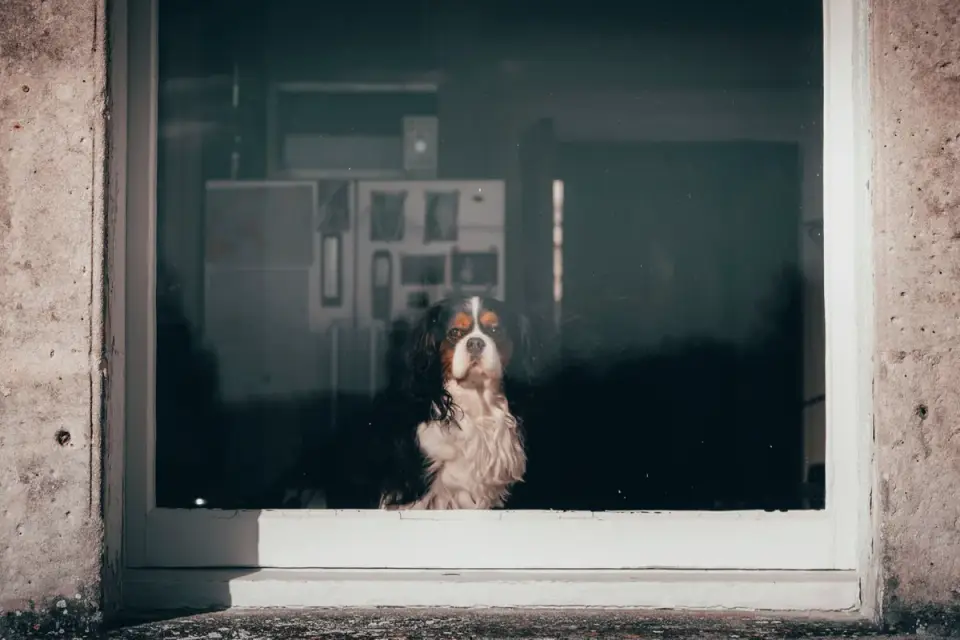
Shorter sessions with an exit route would have told us more.
That failed approach complicates supplement conversations too. Owners often ask about calming ingredients at this stage. Biomedicines notes that “For the remaining species, evidence is derived mainly from preclinical studies or traditional use.” Cureus reports that “A systematic review analyzed multiple RCTs and concluded that ashwagandha has a moderate positive impact on stress reduction and cognitive performance.” Molecular Psychiatry describes “except for one study on psychotic anxiety (SMD = 0.54; 400 mg/day for 8 weeks)” for L-theanine. Reason from mechanism: those findings describe general or human data, not a canine dose-response, and supporting relaxation is not treating separation anxiety or neurologic disease. For broader context on labels and expectations, see our guides to dog anxiety supplements, dog calming chews and ashwagandha evidence in dogs.
The quiet edge case owners misread as calm
The hardest presentation is shutdown, not panic. A nine-year-old, 18-pound terrier mix with chronic noise sensitivity stopped pacing during storms last winter and instead lay flat behind the sofa, muscles rigid, eyes soft but unblinking, refusing chicken by day 2 of a storm series. The owner thought the dog had finally settled. In neurologic terms, prolonged immobility with blunted responsiveness can reflect behavioral inhibition after sustained arousal, not relaxation. Appetite loss, dilated pupils at rest, and failure to greet or explore after the trigger passes help separate shutdown from sleep.
This is where a veterinarian should enter early. Pain, cognitive decline, thyroid disease, and seizure prodromes can mimic or amplify stress postures, and no body-language chart replaces a workup. Bring video, your log, and a list of medications. Ask whether referral for behavior modification is warranted before adding anything new, including discussion of chamomile timing in chamomile dosage guidance.
Going forward, score each encounter the same way: trigger identified, cluster of signals named, recovery time measured. Dogs tell us where they are on the ladder if we observe in order.
Frequently asked questions
What is the earliest body language sign of stress in dogs?
Early signs are often subtle and facial: lip licking without food, brief yawns when awake, ears back from neutral, and half-moon eye. Look for clusters tied to a trigger rather than a single sign.
How do I tell stress yawning from tired yawning?
Context and body tension help. Stress yawns tend to occur during handling, novel sounds, or close approach, often with a closed mouth afterward, turned head, or shake-off. Sleepy yawns occur during rest routines with soft muscles and slow blinks.
When should stress body language prompt a vet visit?
Call promptly for freezing with inability to recover, aggression, appetite loss, house-soiling changes, repetitive pacing, or shutdown and withdrawal lasting beyond the trigger. Video and a dated log help your vet separate anxiety, pain, and neurologic causes.
Sources
- Traditional Herbal Evidence in Remaining Species — Biomedicines
- Ashwagandha and Stress Reduction Systematic Review — Cureus
- L-Theanine and Anxiety Meta-Analysis — Molecular Psychiatry