
On this page
The kitchen lights are low, the leash is by the door, and your dog still cannot settle. Should you reach for chamomile, and what should you actually do first? Start with movement, then consider the herb, then check safety gaps with your veterinarian.
I keep expectations realistic in rehab work. Chamomile does not retrain fear, and it does not replace behavior work, pain evaluation, or a consistent wind-down routine. What it may do is fit inside a calm evening pattern that helps maintain comfort and ease.
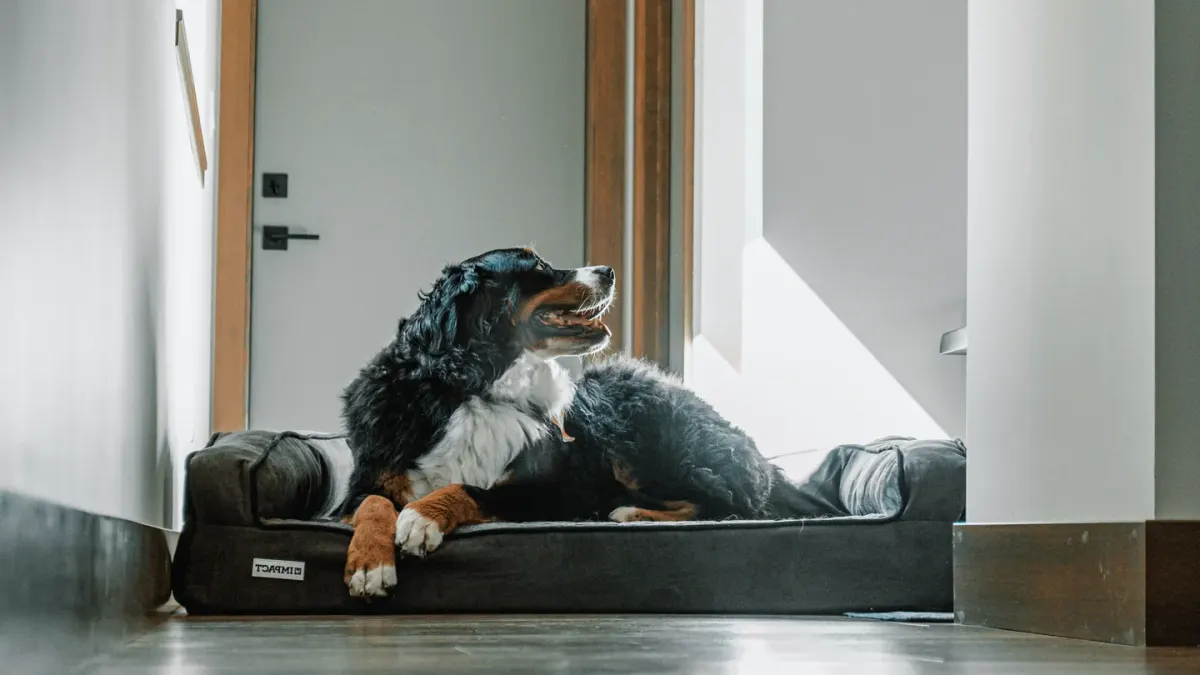
Picture a 9-year-old, 68-pound Labrador retriever who paces between the couch and the back door every night around 9 p.m. His owner has tried a late fetch session, then a stuffed Kong, then silence. By night three of the new plan, the owner swaps the fetch for a slow ten-minute sniff walk, adds five minutes of gentle weight-shifting and stair-free pacing on a rug, then offers a veterinarian-approved chamomile-containing chew and dims the lights. By day 10, the marker that changed was not magic sleep — the dog sighs, folds into a hip roll, and stays on the bed for 40 minutes without circling. That settled body is what we are supporting, not sedation.
Is chamomile really a calming herb for dogs?
Short answer: tradition says yes, dog-specific proof is thin.
MDPI Biomedicines summarized the gap plainly in a broad botanical review: “For the remaining species, evidence is derived mainly from preclinical studies or traditional use.” Dogs fall in that remaining group. That matters for how I talk about it.
Traditional herbal references describe it this way: “Chamomile and Valerian Root have been used in traditional herbal care to support relaxation.” That is structure/function language, not a disease claim. It helps maintain a relaxed state during predictable stressors like travel, visitors, or nighttime restlessness.
Do not buy chamomile for a diagnosis. Buy time and consistency first.
What should you do before you add chamomile?
Lead with the body. Gentle movement supports comfort and mobility, especially in aging or recovering dogs.
Follow this order on restless evenings:
- Walk through a short decompression loop. Move slow, let the nose lead, avoid sprinting or wrestling.
- Add two minutes of body-aware work. Gentle standing weight shifts, slow curb-step ups if joints allow, then a supported down on a non-slip bed.
- Lower stimulation. Same bed, same spot, lower lights, low voice.
- Offer only a dog-formulated chamomile product at the label amount. Never tea with added flavorings, honey, caffeine, or essential oil.
- Track one marker. Time to settle, number of get-ups, or panting score.
If the marker does not improve in two weeks, stop guessing and get a workup.

Where does safety get complicated?
Here is where owners get tripped up.
A 4-year-old, 32-pound cattle-dog mix with storm sensitivity did everything backward for three weeks in June. The owner doubled a human chamomile tea bag in warm water, poured it over food, then added a second calming chew before fireworks. The dog still drooled, trembled, and vomited once on night two of storms. The tradeoff was clear: more herb did not mean more calm, and the stomach paid first. Chamomile sits in the ragweed family, so dogs with Asteraceae sensitivity can itch, lick paws, or develop soft stool. Concentrated oils, alcohol tinctures, and human blends raise the risk further.
Keep it simple and safe.
Check with your veterinarian first if your dog is pregnant, nursing, scheduled for surgery, takes blood thinners, sedatives, or liver-metabolized drugs, or has a bleeding disorder. Stop and call if you see hives, facial swelling, vomiting that repeats, or unusual sleepiness. For dosing context, see our companion piece Chamomile Dosage for Dogs: What Our Panel Actually Recommends.
How does chamomile compare to other calm-down ingredients?
Chamomile is not ashwagandha, and it is not L-theanine.
Cureus noted in a systematic review that: “A systematic review analyzed multiple RCTs and concluded that ashwagandha has a moderate positive impact on stress reduction and cognitive performance.” That finding is largely human data, but it shows a different evidence shape than chamomile. Learn more in Ashwagandha for Dogs: What Our Vet Panel’s Evidence Review Actually Supports.
Molecular Psychiatry described L-theanine research narrowly: “except for one study on psychotic anxiety (SMD = 0.54; 400 mg/day for 8 weeks)”. Again, that dose is human research at 400 mg/day for 8 weeks, not a dog dose.
My evidence-bounded recommendation stays the same: use chamomile only as a low-dose, dog-formulated part of a movement-plus-routine plan, not as a stand-alone fix. The strongest counterargument is fair — why use an herb with mostly traditional use when behavior modification and prescription anxiolytics have stronger data? Because for mild, predictable restlessness in an otherwise healthy dog, owners want a gentle first step that helps maintain evening ease without jumping to daily medication. I still land on routine first, herb second, vet check always.
A last edge case changes the math. A 12-year-old, 18-pound terrier mix with stiff hips rests well after slow hallway walks and supported standing, but pants hard if the house is warm. For that dog, the chamomile chew was not the problem by week two — heat and joint discomfort were. Cooling the room four degrees and adding a joint check did more for settle time than any herb swap. When age and mobility enter the picture, walk through how gentle movement supports comfort and mobility before you judge the supplement.
For broader label checks, see Dog Anxiety Supplements: What Our Panel Looks For Before Trusting a Label.
Frequently asked questions
Can dogs have chamomile tea?
Plain, caffeine-free German chamomile tea is sometimes discussed by veterinarians, but human blends can contain flavorings or xylitol-risk additives. Use only a dog-formulated product and confirm amount and frequency with your veterinarian.
How long does chamomile take to work in dogs?
There is no established dog onset time. Owners often pair it with a 30 to 60 minute wind-down routine of gentle movement and low stimulation, then track settle time for 10 to 14 days.
Sources
- Traditional herbal use review in dogs and other species — MDPI Biomedicines
- Ashwagandha stress review — Cureus
- L-theanine anxiety review — Molecular Psychiatry