
On this page
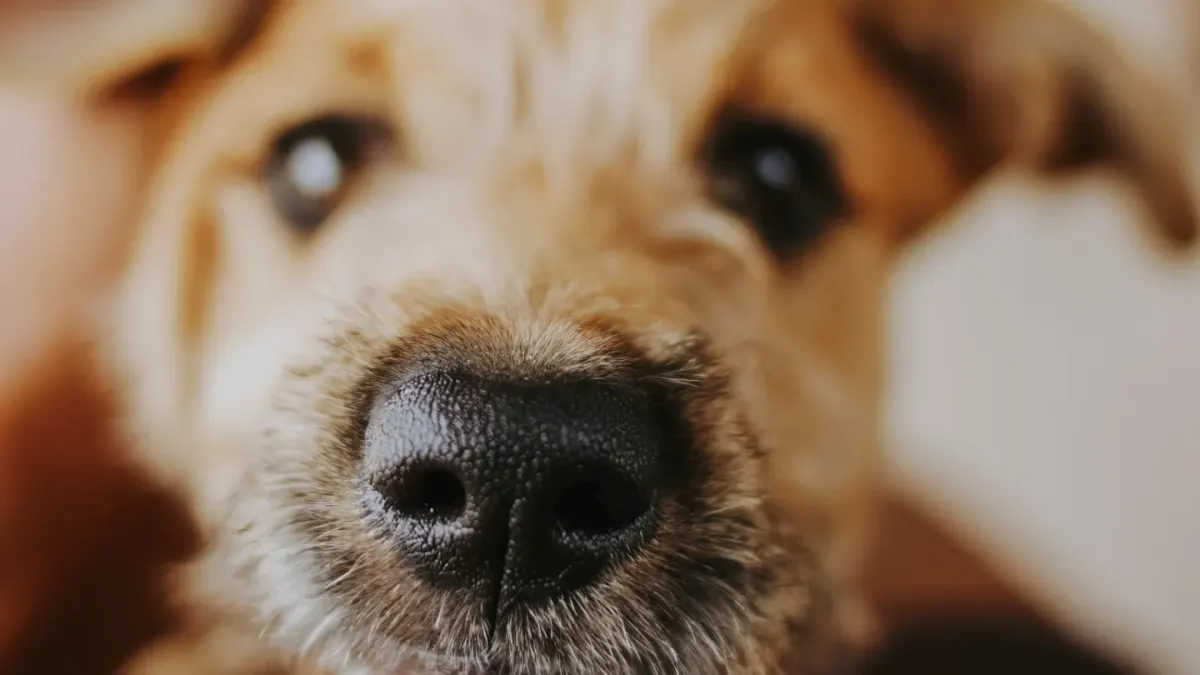
A dog nose that is dry and cracked on one side carries more localizing information than a nose that is simply dry all over, because moisture, airflow, and tissue health should be roughly symmetrical when the whole patient is in balance. Healthy nasal planum stays supple through paired airflow, normal trigeminal sensation that prompts licking, and an intact mucosal barrier, so when dryness and fissuring settle on one nostril or one half of the nasal planum while the other side remains smooth and moist, the nervous-system input beside the local tissue pattern points us toward a one-sided process rather than weather, sleep, or age alone. A patient of mine, Odo, a 6-year-old neutered male Dachshund mix from Chesapeake, Virginia, showed this clearly when his owner Cheryl noticed persistent right-sided crusting that did not shift from morning to evening, and that fixed asymmetry is what moved us from watchful home care to examination.
Why asymmetry changes the interpretation
Both nasal passages share systemic hydration, environmental air, and general health, which means a whole-nose dry spell after sun, wind, heat, or a long nap often evens out once the dog drinks, licks, and moves around again. One-sided dryness that persists across days suggests reduced airflow, reduced licking on that side, localized inflammation, or tissue change on that side, even while the rest of the dog seems comfortable and whole-patient balance appears preserved. That distinction matters because unilateral discharge, bleeding, swelling, depigmentation, or ulceration can accompany nasal tumors, fungal disease, foreign material, or immune-mediated disease affecting the nasal planum, as summarized in overviews such as PubMed – Canine Nasal Disease.
5 one-sided causes veterinarians weigh first
1. Reduced licking from discomfort or altered sensation. Dogs maintain nasal moisture in part by licking, which depends on comfortable trigeminal and facial nerve function beside normal mouth and tongue movement. If one side of the nose is sore, swollen, or less sensitive, the dog may lick unevenly, and that side may help support further drying and cracking until comfort is restored.
2. Unilateral discharge that dries into crust. Clear, mucoid, bloody, or purulent discharge from one nostril can dry at the nares and mimic primary skin disease, while the underlying process sits deeper in the nasal passage or sinus. Persistent one-sided sneezing, snorting, pawing, noisy breathing, or loss of airflow on that side deserves examination rather than repeated crust removal alone.
3. Foreign material, trauma, or sun and contact irritation. A grass awn, scratch, insect sting, harsh cleaner, plastic bowl irritation, or repeated sun exposure on a pale or sparsely pigmented area can roughen one edge or wing of the nose. These lesions are often tender, may start suddenly, and may help support healing once the irritant is removed and the barrier is protected, although embedded material still needs veterinary removal.
4. Nasal mites and infectious or fungal inflammation. Parasites such as Pneumonyssoides caninum, bacterial rhinitis, and fungal rhinitis more often produce sneezing, reverse sneezing, head shaking, and unilateral or shifting discharge before secondary crusting appears, a pattern described by PubMed – Pneumonyssoides caninum. Odor, facial rubbing, epistaxis, or lethargy alongside the crust makes infection or infestation more likely and makes home-only care insufficient.
5. Immune-mediated and neoplastic disease of the nose. Discoid lupus erythematosus often begins with loss of cobblestone texture, depigmentation, scaling, and shallow ulceration on the nasal planum, sometimes asymmetrically at first, a course detailed by PubMed – Canine Discoid Lupus. Pemphigus, uveodermatologic patterns, and nasal or paranasal tumors can also produce nonhealing sores, bleeding, deformity, or progressive obstruction, and PubMed – Canine Nasal Tumors notes that persistent unilateral signs warrant imaging and biopsy when routine care does not resolve them.
Signs that warrant a prompt examination
Call your veterinarian promptly for one-sided nose changes paired with bleeding, yellow-green discharge, foul odor, mouth breathing, reduced airflow through one nostril, facial swelling, asymmetry, enlarged lymph nodes, eye discharge on the same side, weight loss, lethargy, or loss of smell and appetite. Photograph the nose in the same light each day, note which side is affected, and record sneezing, discharge color, pawing, and whether the dog can breathe comfortably through each nostril during rest. Do not pick firmly adherent crusts, apply essential oils, steroid creams, zinc oxide, or heavily fragranced balms, or delay care while trying supplement routines discussed in pieces such as Bee Pollen and Propolis for Dogs: Benefits and Safety, Weighed Honestly or Can You Combine a Senior Longevity Chew With a Joint Supplement?, because those approaches may help support general nutrition yet cannot diagnose obstruction, infection, or tissue disease.
What careful home care may help support while you wait
For a comfortable dog with mild, superficial flaking and no discharge, bleeding, pain, or breathing change, gentle supportive care may help support barrier comfort while you monitor for 24 to 48 hours and arrange veterinary advice. Soften loose debris with a warm damp cloth rather than scrubbing, keep fresh water available, use a clean stainless-steel or ceramic bowl, reduce harsh sun and dry heat exposure, and ask your veterinarian whether a plain, dog-safe, fragrance-free nasal balm is appropriate for the specific lesion. Acupuncture, Tui-na around the head and neck, and food-based support are sometimes folded into the broader plan to support circulation, relaxation, and whole-patient balance alongside conventional diagnosis, without overstating what they fix when a structural, infectious, or immune-mediated lesion is driving the asymmetry. Seek recheck quickly when cracking deepens, spreads, bleeds, loses pigment, ulcerates, or fails to improve, because early examination, cytology, biopsy, rhinoscopy, or imaging clarifies the pattern far better than prolonged trial and error.
Frequently asked questions
Should I worry if my dog's nose is dry and cracked on one side but he acts normal?
Persistent asymmetry still deserves a call, because comfortable dogs can have early localized disease. Monitor for 24 to 48 hours for discharge, bleeding, color change, sores, sneezing, or breathing noise, and schedule an exam if crusting stays fixed to one side.
Can I put coconut oil or balm on the cracked side?
Use only a plain, dog-safe product your veterinarian approves, applied thinly after gentle softening with a warm damp cloth. Avoid essential oils, steroids, zinc oxide, and fragranced products, and stop and call if redness, pain, or ulceration worsens.
Sources
- Canine Nasal Disease Literature Search — PubMed – Canine Nasal Disease
- Pneumonyssoides caninum Literature Search — PubMed – Pneumonyssoides caninum
- Canine Discoid Lupus Erythematosus Literature Search — PubMed – Canine Discoid Lupus
- Canine Nasal Tumor Literature Search — PubMed – Canine Nasal Tumors