
On this page
Watch a Basenji, a Husky, and a Pug walk past and the tails tell three different histories, with each curl shaped by selection for cold, for pack signaling, or for compact companion form, while the nerves and muscles inside still need to move freely and rest comfortably. From a neurology perspective, tail carriage reflects both vertebral shape and the tone of the muscles and nerves that lift and relax the tail, considered alongside the whole dog and how easily the tail wags, tucks, and rests.
Loose sickle and saber curls
The loosest version is the sickle tail, carried up in a gentle curve like a sickle blade, sometimes relaxing down when the dog is resting. Many northern and sporting breeds show this pattern, where the tail rises over the back during alert movement and lowers during sleep without a fixed roll.
The Siberian Husky Dog Breed Information describes the classic northern tail, well furred and carried in a graceful sickle curve over the back when alert, which fits a breed developed to conserve heat and communicate at a distance. Owners often notice the change most during grooming, when brushing and cleaning dirty patches become part of the routine and a quick check of tail carriage shows whether the base moves symmetrically.
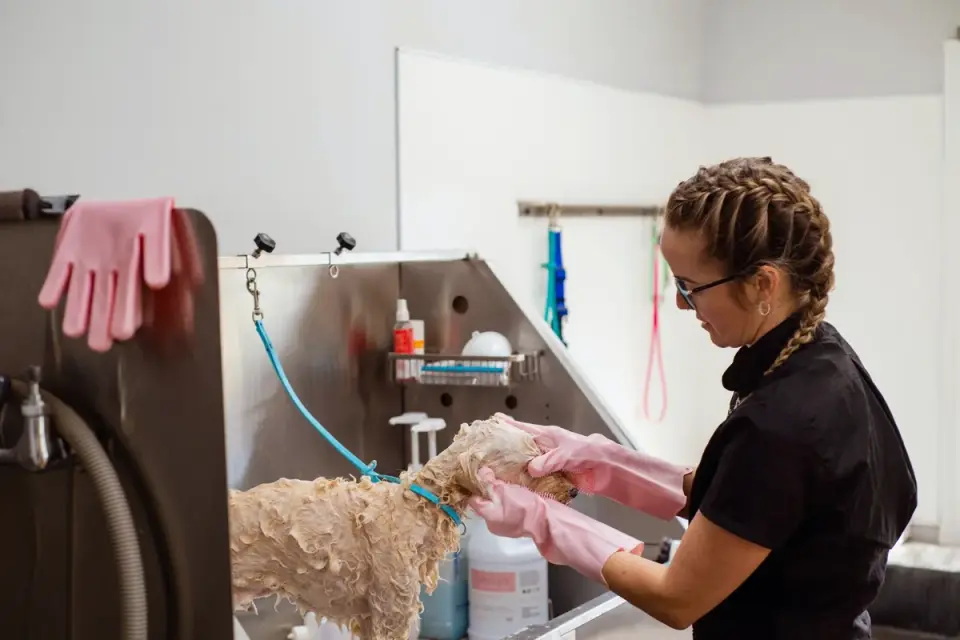
Care here is simple: keep the fringe free of mats, rinse away mud from the underside between baths, and watch for a tail that suddenly hangs limp, tucks tightly, or seems painful to lift, which deserves a veterinary examination rather than waiting.
Single loop curls over the back
The next step is a fuller loop, where the tail makes one open curl and rests over the back or to one side. Basenjis, Alaskan Malamutes, and many spitz types carry this shape, and the curl often shifts slightly from side to side with wagging.
This shape developed alongside prick ears, dense coats, and compact feet for cold or brush country, and it still functions as a visual signal during social greeting. I regularly trim my dog’s nails and tidy the fur around her paws, and that same regular handling moment is a good time to feel along the tail base for even muscle bulk, smooth skin, and a willingness to wag in both directions.
If the loop looks fixed, flattened, or newly off-center, or if the dog cries when the tail is touched, have the tail and lower spine examined for injury, infection, or nerve irritation.
Tight double curls and corkscrews
At the tight end are double curls that lie flat against the back and true corkscrew or screw tails, where individual vertebrae are wedge-shaped and the tail folds into a short twist. The Pug Dog Breed Information describes the breed ideal as a high-set tail with a tight curl over the hip, a direct example of selection for a compact, round silhouette in a companion breed.
Bulldogs, Boston Terriers, and Pugs may carry varying degrees of this shape, and the skin beneath a very tight fold may help support comfort when it is kept clean and dry, since trapped moisture can irritate folded skin. Between grooming appointments, rinsing away mess from the paws, belly, and tail fold and then drying gently may help support skin health, although it does not change the underlying vertebral shape.
When shape affects comfort
Most curly tails are simply breed variation, yet a very tight screw can sit close to the spine and, in some dogs, accompany vertebral differences that affect balance, hind-limb strength, or continence.
Call your veterinarian if you notice rubbing or odor under the curl, hair loss at the fold, scooting with tail chasing, new wobbliness, trouble holding urine or stool, or a tail that was curly and becomes suddenly straight and painful. Early examination, gentle cleaning as directed, weight balance through food-first care, and, where appropriate, acupuncture or Tui-na alongside conventional neurology care may help support mobility and whole-patient comfort without promising to straighten structure.
For broader coat and supplement reading, owners who enjoy comparing evidence may find Astaxanthin for Dogs: What the Antioxidant Evidence Actually Supports and Bee Pollen and Propolis for Dogs: Benefits and Safety, Weighed Honestly useful for understanding how we weigh antioxidant and food-based claims.
Frequently asked questions
What are the different types of curly tails in dogs?
The main groups are loose sickle tails, single loop curls over the back, tight double curls, and short corkscrew tails, with tightness largely reflecting breed heritage and vertebral shape.
Do curly tails need extra cleaning?
Only tight folds need routine attention; lift gently, wipe away debris as directed by your veterinarian, dry well, and seek care for redness, odor, or soreness.
Sources
- Siberian Husky Dog Breed Information — American Kennel Club
- Pug Dog Breed Information — American Kennel Club