
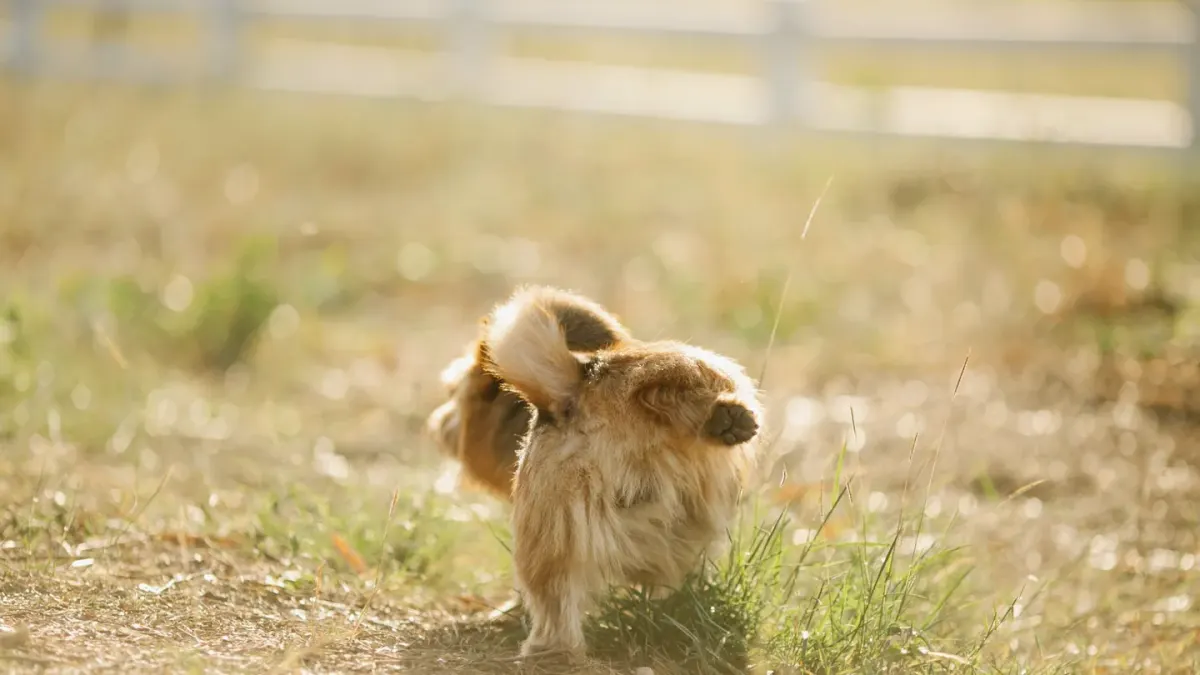
Denise in Hialeah started filming Tate, her 5-year-old intact male Dachshund, after finding a puddle by the front door even though he had urinated normally an hour before she left, and that sequence of an empty bladder before departure followed by indoor urination only during absence is the fork in the road I watch for as a neurologist attuned to arousal and whole-patient balance.
Rule out the bladder before retraining the brain
Owners often interpret the puddle as spite or poor training, yet increased urgency from infection, stones, kidney disease, diabetes, Cushing disease, or age-related sphincter weakness may help explain why holding fails under even mild stress, and straining, cloudy or bloody urine, foul odor, frequent small voids, increased thirst, new diuretics or steroids, or leaking while sleeping point more toward the urinary tract than toward emotion alone.
The signs of bacterial cystitis described by VCA Hospitals include difficult or painful urination, increased frequency, and blood in the urine, so a veterinary visit with urinalysis, and blood work and imaging when indicated, should come before any alone-time retraining plan. If your dog also drinks and urinates more overall or seems more tired in summer heat than she used to, bring those whole-body clues to the visit rather than focusing only on the puddle.
How separation distress changes urination
Once medical causes are addressed and the dog still voids soon after departure, often with whining, pacing, drooling, door scratching, or refusal of food, I think in terms of autonomic arousal tipping a sensitive bladder over threshold, where sympathetic activation followed by parasympathetic rebound may help support urgency, reduced inhibitory control, and incomplete emptying on the pre-departure walk.
Video tells more than the puddle itself, so record 30 to 60 minutes after you leave and note timing of the first whine, pace, circle, sniff, and squat, whether the volume is large or small, and whether vocalization or destruction clusters around exit points, since the behavior pattern outlined by ASPCA often begins shortly after departure and differs from a dog that simply had too little opportunity to void. That camera record also helps separate true isolation distress from nighttime pacing back and forth linked to pain, cognitive change, or need to void.
From a TCVM perspective I set that nervous-system surge beside the whole-patient pattern of digestion, sleep, heat tolerance, and recovery after exercise, because a dog that cannot settle, pants with routine activity, or needs prolonged recovery may carry broader imbalance that keeps arousal high when the house goes quiet.
What to do next without punishment
Start with management that lowers both bladder pressure and arousal, with a calm 10 to 20 minute sniff walk for complete emptying, no large drink right before confinement, a consistent low-key departure cue, and a small washable confinement area rather than full-house access while you gather data.
Then rebuild independence in short graduated absences paired with a food puzzle or lick mat only if the dog will actually eat when alone, keep arrivals and departures matter-of-fact, never scold for accidents found later, clean with enzymatic cleaner, and seek prompt in-person help for straining, blood, incontinence while sleeping, sudden large-volume thirst, or panic with risk of injury. For Tate, a simple log of departure time, time of the accident on camera, urine appearance, and intake helped Denise and her veterinarian confirm that urgency tracked absence rather than infection, and that clarity made graduated alone-time training, rather than more potty trips alone, the next step.
Sources
- Urinary Tract Infections (UTIs) in Dogs — VCA Hospitals
- Separation Anxiety — ASPCA