
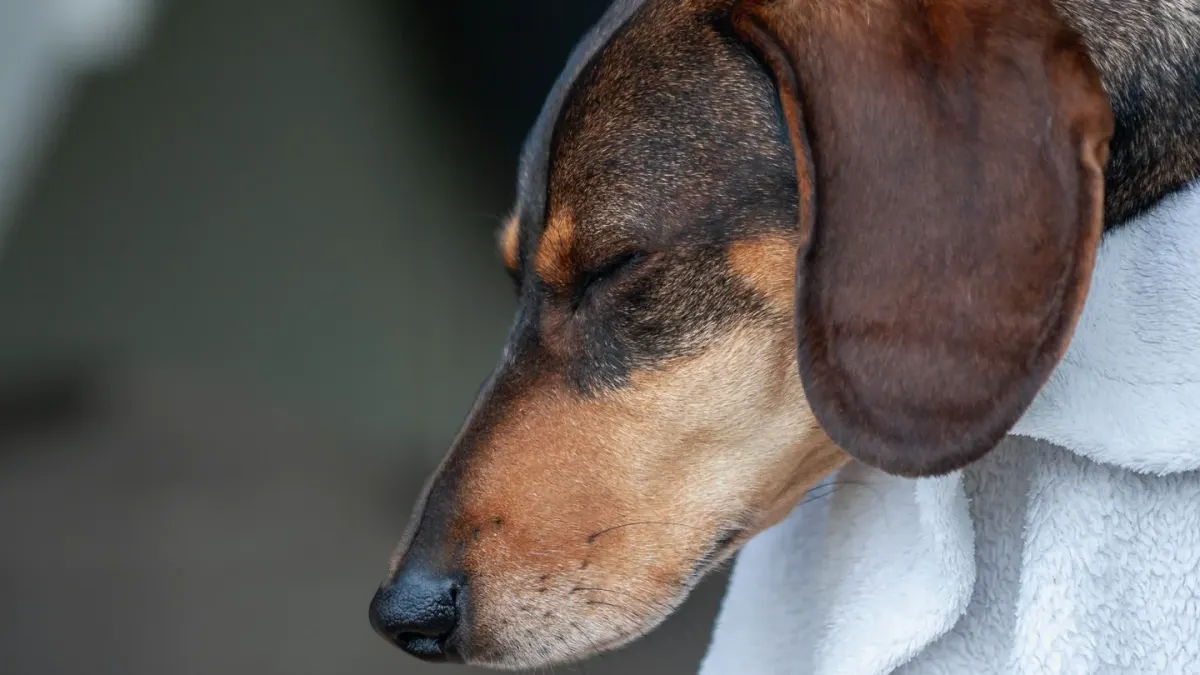
You hear the first distant pop in October and your dog is already panting at the back door. You have not moved, the house has not changed, yet hunting season has started without you.
I saw this pattern last fall with a 4-year-old 62-pound Lab mix who lived near state land. Opening weekend brought three days of intermittent shots, and by day 10 his appetite at breakfast had slipped and he would not settle on his bed until late evening. His owner wondered if he needed a field fix or a home fix, and that choice is really what this guide is about. We framed everything as manipulation and mobility support, because a tense dog carries tension through the neck, shoulders, and hind end. Calm behavior may help maintain easier movement.
Why gunshots scare dogs more than everyday noise
Gunfire is sharp, loud, and unpredictable. Thunder builds with pressure change and rain sound, while a shot cracks and fades with no pattern you can learn. Dogs hear higher frequencies well and startle hard at sudden onset, so repeated shots during hunting season can keep the nervous system on alert for hours.
Routine change piles on. Trucks at odd hours, unfamiliar voices, scent of game, longer alone time when you hunt. Food-first care still matters here, with steady meals and water and walks at the same time when you can hold them. Tui-na bodywork and gentle handling around the shoulders may help maintain relaxation, though it will not erase sound fear by itself.
A Biomedicines review noted that “For the remaining species, evidence is derived mainly from preclinical studies or traditional use.” That line keeps me honest about calming herbs for dogs. Traditional use can inform a plan, yet it is thin support on its own.
Spooked on the couch versus stressed in the field
Compare the two dogs I hear about most. One hides at home while someone else hunts miles away. The other travels with you and trembles at the truck when shots ring out.
The home dog needs predictability. Close windows, run white noise, keep a chew and a worn shirt nearby, and practice short departures so quiet still feels normal. The field dog needs distance and choice. Never tie out near shooting, let the dog move away from sound, and reward check-ins rather than forcing a stay.

We tried the hard way with a 6-year-old 48-pound pointer who shook at the tailgate. Two weeks in, his owner had tried crating him in the truck with the windows up during morning shoots, thinking confinement would teach him to settle. Panting worsened by day 5 and he started drooling and pawing the door, so we backed off that tradeoff completely. Confinement near gunfire raised his load instead of lowering it. We shifted to home rest on shoot days plus leash walks away from fields, with acupuncture and medical manipulation woven into his mobility plan to address the bracing through his back.
That contrast is why I reject forced exposure. Flooding may look like toughness, but sensitization is more common.
You can read more on steady daily options in Dog Calming Chews: What the Evidence Actually Supports and on label reading in Dog Anxiety Supplements: What Our Panel Looks For Before Trusting a Label.
What steady support may help maintain
Our panel weighs evidence, dose, and testing, then hands down a clear call. For sound fear, behavior and environment carry the most weight. Supplements sit in a support role and the evidence is mixed.
Ashwagandha has human data worth naming. A Cureus systematic review found that “A systematic review analyzed multiple RCTs and concluded that ashwagandha has a moderate positive impact on stress reduction and cognitive performance.” That finding is general, not dog specific, so I treat it as interesting but not decisive for gunshot fear.
L-theanine is similar. It is an amino acid studied for calm, and a Molecular Psychiatry review flagged benefit “except for one study on psychotic anxiety (SMD = 0.54; 400 mg/day for 8 weeks)”. That dose is human, so never borrow it for your dog. Ask your vet about form and fit rather than scaling people numbers.
Chamomile sits in the same lane. Traditional herbal care has long used it to support relaxation, yet dog trials are thin. If you explore herbs, do it after a workup, as one variable, with food-first nutrition and bodywork continuing underneath.
Here is the edge case that changes the plan. A 9-year-old 18-pound terrier mix came in for noise fear three weeks in to hunting season, and his startle looked new rather than seasonal. On exam his hind-end stiffness had worsened and he flinched on spinal palpation, which shifted my concern toward pain raising sound reactivity. We paused new supplements, addressed comfort and slip-free footing first, and his nighttime pacing eased before we revisited any calming plan. Older dogs with new fear deserve a hands-on check.
It helps to compare that path with quick fixes like human gummies, which carry their own risks, as explained in Human Melatonin Gummies vs Dog Calming Chews: The Xylitol Risk Owners Miss.
Fear is information.
My verdict lands here. Protect sleep, movement, and routine through hunting season, use distance from gunfire instead of forced exposure, add acupuncture or medical manipulation where your vet finds tension, and consider calming ingredients only as supervised support that may help maintain relaxation. Where does your dog rest easiest on shoot days, and can you guard that spot first?
Sources
- Chamomile Evidence Review in Biomedicines — Biomedicines
- Ashwagandha Systematic Review for Stress — Cureus
- L-Theanine Review in Psychotic Anxiety — Molecular Psychiatry