
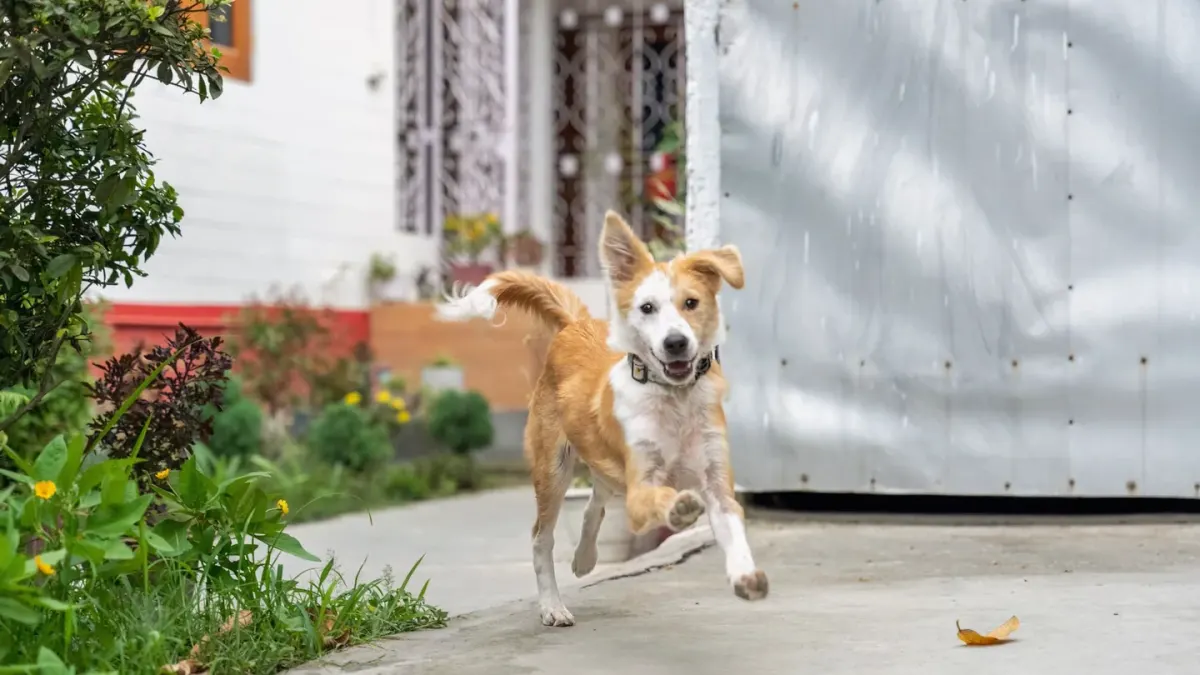
A seven-year-old Border Collie, 48 pounds, started pausing at the foot of the back steps after fetch, then taking them two at a time once she was warm. Her owner wondered whether it was soreness, stiffness, or just age, and whether anything she fed could change it. That pause before movement is where joint anatomy stops being a diagram and becomes a daily decision about exercise, weight, and support, because to think in movement, comfort, and quality of life is to ask what helps this dog move with less effort tomorrow.
The clearest way to picture a working joint is as a load-sharing system. Articular cartilage provides a smooth, low-friction surface over the bone ends. Synovial fluid lubricates and nourishes that cartilage. The fibrous capsule and ligaments hold alignment, while surrounding muscle absorbs shock and guides motion. When one part loses capacity, the others carry more, and that is often when owners first notice a hesitation, a shortened stride, or slowness to rise.
When Smooth Glide Turns to Extra Friction
Cartilage itself has no blood supply to speak of, so it depends on cycles of loading and unloading to move nutrients in and waste out. In laboratory work, glucosamine has been reported to “prevent experimentally induced cartilage degradation in vitro” according to work published in The Journal of Veterinary Medical Science, which helps explain why researchers keep studying cartilage nutrition rather than treating cartilage as inert padding.
That finding does not mean a powder rebuilds a worn hip. It means cartilage health is biologically active and sensitive to its chemical environment.
What cartilage can and cannot do
Healthy hyaline cartilage compresses slightly under weight, then rebounds. With age or after injury, the surface can roughen and thin, which raises friction and changes how force spreads across the joint. Dogs often compensate quietly at first, shifting weight, sitting with a leg out to the side, or avoiding a tight turn on a trail.
The middle story in this guide comes from a different kind of mistake. A five-year-old Labrador Retriever, 82 pounds, had grown stiff after weekend hikes, and his owner added longer walks to “loosen him up,” plus table scraps for comfort on sore evenings. By three weeks in, his morning rise was slower, not faster, and he began bunny-hopping up the two porch steps he used to take cleanly. Rest and weight, not more mileage, were the missing support, and once daily distance was cut and food was measured, his gait evened out. The tradeoff was hard for the owner to accept because movement helps cartilage nutrition, yet too much loading on an irritated joint raises friction faster than nutrition can compensate.
The Fluid, the Capsule, and the Guides Around Them
Synovial fluid is often described as oil, but it behaves more like a responsive cushion that thickens and thins with movement. Recent peer-reviewed discussion notes that chondroitin “supports healthy synovial fluid homeostasis” in work published in Frontiers in Veterinary Science, a reminder that the fluid environment matters as much as the hard surfaces it bathes.
Around that fluid sits the joint capsule, a sleeve of connective tissue with an outer fibrous layer for stability and an inner synovial membrane that produces fluid. Ligaments such as the cranial cruciate ligament in the stifle act as check-reins against abnormal sliding and rotation. Tendons and muscle then fine-tune the motion, which is why hind-limb muscle loss can make a mild joint change look suddenly severe.
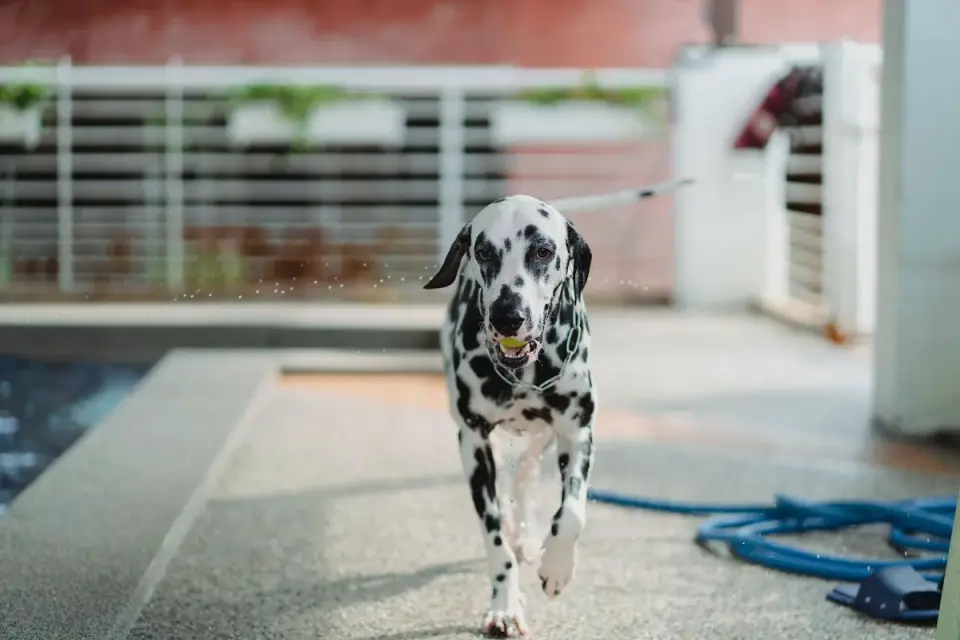
Conditioning supports that muscular share of the work without overloading the joint.
Dogs with early mobility changes often do better with short, frequent walks, sure footing, ramps for car and couch access, and body condition kept lean enough that ribs are easily felt under a light fat cover. For readers sorting through supplement labels, our panel’s broader guides to Best Joint Supplement for Dogs: Our Vet Panel’s Scored Verdict and Glucosamine HCl Dosage for Dogs: What the Label Should Say and What It Shouldn’t lay out how dose and testing are weighed separately from anatomy.
Ligaments, menisci, and the stifle exception
The stifle contains two crescent-shaped menisci that deepen the joint and spread load between femur and tibia. A sudden yelp on a turn, toe-touching lameness, or swelling at the front of the knee points more toward ligament or meniscal injury than to gradual cartilage wear, and that distinction changes the plan from conditioning to prompt veterinary examination.
An edge case reshapes the anatomy lesson near the end of life. A thirteen-year-old Dachshund mix, 19 pounds, still had reasonable cartilage on radiographs but had lost thigh and shoulder muscle after two quiet winters indoors. By day 10 of a gentle program of five-minute leash walks, warm bedding, nail trims for traction, and food-therapy style warming meals alongside her balanced diet, she rose in two attempts instead of four. Research on complex lipid and fatty-acid ingredients remains early, with one nutrient study reporting that “BMO, GMO, and KO all alleviated paw swelling in rats and reduced serum levels of rheumatoid factor (RF), anti-cyclic citrullinated peptide (anti-CCP) antibody, and pro-inflammatory cytokines such as TNF-α and IL-17” according to Nutrients, which is not a canine mobility claim. Her improvement came from traction, muscle use, and comfort, not from any single molecule.
That is the conviction rehabilitation keeps returning to, and the counterargument deserves its name. The strongest challenge says anatomy education without a product recommendation leaves owners with understanding but no action. The answer is that action lands better once owners can locate the problem in movement, since a dog that struggles to rise needs muscle support and joint comfort together, while a dog that limps on one leg after play needs examination first. More detail on chronic joint change is covered in What Degenerative Joint Disease Actually Is in Dogs.
Meet older dogs and their people where they are, and let comfort set the pace.
Frequently asked questions
What are the main parts of a dog's joint?
Articular cartilage covers the bone ends, synovial fluid lubricates and nourishes, the capsule and ligaments maintain alignment, and surrounding muscle absorbs load and guides motion.
Why does my dog feel stiff after rest but better after walking?
Synovial fluid distributes with gentle movement and muscles warm up, so brief stiffness that eases with a slow warm-up often reflects friction and disuse rather than a sudden injury; persistent lameness or swelling warrants an exam.
Can supplements rebuild cartilage?
No supplement has been shown to regrow worn cartilage in dogs. Studied ingredients such as glucosamine and chondroitin are researched for supporting cartilage and the fluid environment, which is structure and function support rather than repair.
Sources
- Cartilage degradation in vitro study — The Journal of Veterinary Medical Science
- Synovial fluid homeostasis review — Frontiers in Veterinary Science
- Mussel and krill oil inflammation study — Nutrients