On this page
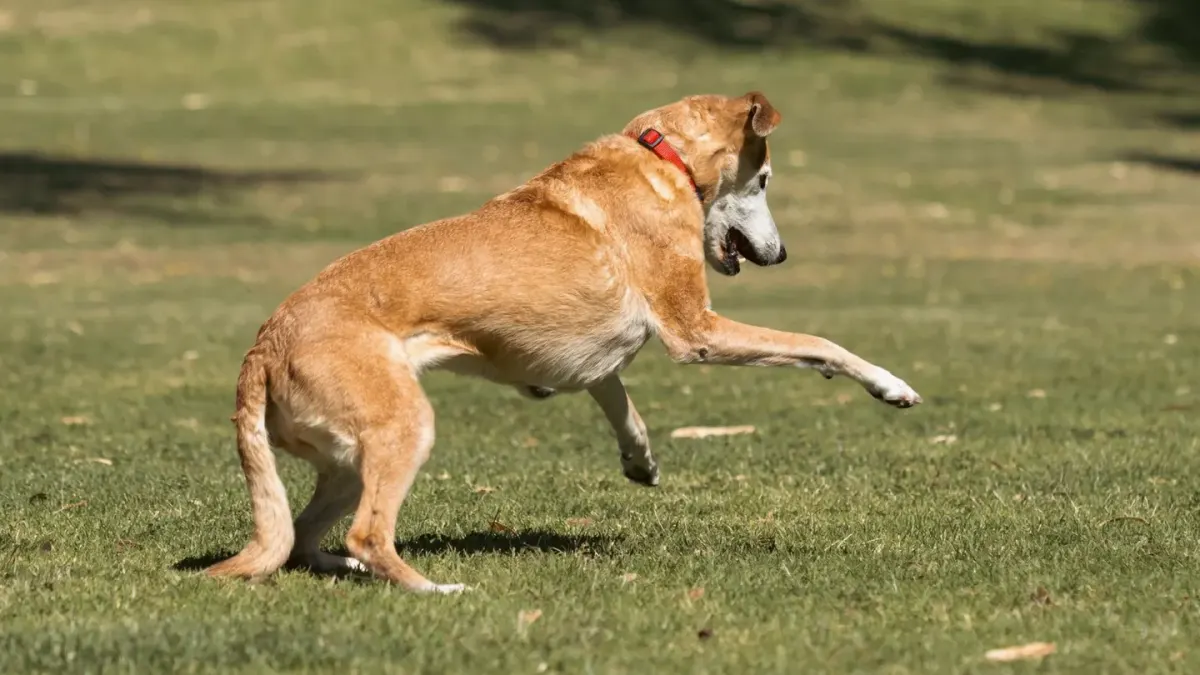
A nine-year-old shepherd mix used to clear the back-porch steps in one bound. Now her owner counts three careful hops, a pause at the top, and a slight list to one side before she settles at the door. Nothing hurts, exactly. She still eats well, still wants the walk. But the hindquarters that used to look like coiled rope now read as flatter, softer, less defined under the coat. This is the moment a lot of owners start typing “dog muscle supplement” into a search bar, hoping there’s a scoop or a chew that reverses what gravity and age are doing. There sometimes is help available. It is rarely the whole story.
In my acupuncture and TCM training, we’d call this pattern a Qi and Blood deficiency showing up in the muscle layer — the body’s transporting and nourishing function running low, so tissue that once held tone starts to waste. I don’t expect every owner to care about meridian theory, and I’m not going to dress up plain physiology in mystical language. But the underlying instinct in that framework is sound: muscle loss is a whole-body circulation-and-fuel problem, not a single missing nutrient. Translated into plain guidance, that means the fix has to work on intake, movement, and inflammation together — a supplement can support one piece of that, not carry the whole load.
What Sarcopenia Looks Like Before You’d Call It That
Veterinary sources describe canine sarcopenia — progressive lean muscle loss tied to aging — as something that can begin as early as seven years old in larger breeds, per PetMD. It isn’t classified as a disease you cure; it’s a process you manage, typically with a combination of higher protein intake, low-impact exercise, and, where appropriate, supplementation. The Purina Institute frames it similarly under therapeutic nutrition: catch it early, because muscle that’s already visibly lost is much harder to rebuild than muscle that’s just starting to soften.
That early-detection window is the whole game. Once an owner can see the topline change from across the room, the dog has usually been losing tissue for months.
The Muscle-Building Ingredients With Real Data Behind Them
Protein is not glamorous, but it is still the best-supported lever here. Diets and treats built around higher-quality, higher-quantity protein — often alongside leucine, an amino acid tied to muscle protein synthesis — show up repeatedly in veterinary nutrition guidance for aging dogs. Beyond protein, HMB (beta-hydroxy-beta-methylbutyrate) has the most direct canine muscle evidence of any single supplement ingredient I’d point to. A pilot study in dogs with Duchenne muscular dystrophy found that daily HMB supplementation affected protein and amino acid metabolism and daily activity levels with a favorable safety profile, according to a study indexed in PMC. That’s a small, specific patient population — not a healthy-senior-dog trial — so I’d call the signal encouraging rather than settled.
Omega-3 fatty acids round out the shorter list of ingredients with a plausible, if softer, mechanism: supporting the proteins involved in muscle maintenance while helping blunt the inflammatory signaling that accelerates breakdown. None of this is a cure. All of it is structure-and-function support, and it should be described that way on any label you trust.

Where the Qi-and-Muscle Connection Actually Helps
Here is where I’ll take a position instead of surveying the field politely. The TCM-informed camp sometimes leans hard into herbs and needle work as if they can substitute for protein and movement. They can’t, and I won’t pretend otherwise. But the meridian framework does one thing well: it forces you to look at the whole dog — appetite, digestion, circulation, sleep — instead of treating muscle loss as an isolated ingredient problem. In practice, that means pairing any supplement with acupuncture-adjacent basics an owner can do at home: consistent short walks instead of one long weekend hike, warm compresses on stiff hindquarters before activity, and feeding timed to support digestion rather than overload it. None of that replaces the protein-and-movement foundation. It just makes the foundation easier for an older dog to actually use.
Consider a different dog: a lean, anxious eleven-year-old terrier whose owner had already tried three different “senior support” chews before asking for help. Her hindquarters had thinned noticeably over a single winter, and she’d started refusing the second half of her usual walk. The instinct was to add a fourth supplement. The more useful move was subtracting stress from her routine, upping her protein at the meal level, and using short, low-impact sessions to rebuild confidence in her own legs before adding anything new to the bowl. Supplements entered the picture only after that foundation was back in place — and even then, framed to the owner as something that may help support recovery, not something that would drive it.
The Antioxidant Additions: Promising, But Thin
Some muscle-and-aging formulas fold in antioxidants like quercetin and resveratrol, reasoning that oxidative stress accelerates tissue breakdown generally. The direct evidence for these two ingredients is genuinely thin and mostly non-canine. A 2025 pharmacology study found that quercetin, unformulated Q, NAC, and ascorbic acid did not affect feeding behavior in a lab model at the concentrations tested — a finding about tolerability, not muscle benefit, per Pharmaceuticals (MDPI). Separately, a Phytomedicine study on embryonic resveratrol exposure found it accelerated development but shortened adult lifespan in the model organism studied — a reminder that even generally well-tolerated compounds can behave unpredictably outside their tested dose and species. I’d file both ingredients under “reasonable adjunct, unproven driver” until dog-specific muscle trials exist.
Reading a Label Like a Panelist Would
Before any ingredient claim matters, check whether the company backs it structurally. The NASC: National Animal Supplement Council Quality Seal requires member companies to pass facility audits every two years, maintain a documented quality control process, submit to independent random product testing, and report adverse events. That doesn’t tell you an ingredient works. It does tell you the company stands behind what’s on the label, which is the baseline I want cleared before I even discuss dose.
Our panel scoring for adjacent supplement categories — including senior-support chews generally — follows the same logic, and you can see how we weight testing versus ingredient evidence in how our reviewing vets score dog supplements. Readers comparing a muscle-focused chew against broader healthy-aging formulas may also find our separate look at the best longevity supplement for senior dogs useful, since several ingredient categories overlap.
The Verdict
If I had to rank the levers by evidence strength, protein-forward nutrition and consistent low-impact movement sit at the top, HMB is the single ingredient with the clearest canine-specific signal, and omega-3s earn a reasonable second tier. Antioxidants like quercetin and resveratrol may help support the broader picture, but I wouldn’t choose a product on their presence alone. Supplements marketed around cellular energy production, including NAD+ precursors, target an adjacent piece of aging physiology rather than muscle directly — our NAD+ supplement verdict covers that ingredient class on its own terms. The shepherd mix from the top of this piece didn’t need a new chew first. She needed her protein checked, her walks shortened and steadied, and a supplement added only once that foundation held. That order of operations is the whole recommendation.
Frequently asked questions
Can a supplement alone rebuild lost muscle in an older dog?
No single chew rebuilds muscle on its own. The strongest lever is still protein intake paired with regular, joint-appropriate movement; supplements are best framed as support alongside that foundation, not a replacement for it.
Is creatine safe or useful for dogs?
Creatine is well studied in humans and has some early pharmacokinetic work in dogs, but robust canine muscle-outcome trials are still limited. Treat any creatine-containing product as an open question to raise with your vet rather than a settled answer.
What ingredient has the best dog-specific muscle data right now?
HMB (beta-hydroxy-beta-methylbutyrate) has the most direct canine evidence, including a pilot study in dogs with muscular dystrophy that showed favorable effects on protein metabolism and daily activity, per a study indexed in PMC.
Do antioxidant ingredients like quercetin or resveratrol help with muscle recovery?
Possibly, indirectly, by supporting cellular and antioxidant balance — but the direct evidence is thin and largely comes from non-canine models, so I treat these as a 'nice to have' rather than a reason to choose one product over another.
How do I know a muscle supplement is made responsibly?
Look for NASC Quality Seal membership, which requires facility audits, a quality control manual, and independent product testing — a baseline most reputable dog supplement makers now meet.
Sources
- Sarcopenia in Dogs — PetMD
- Sarcopenia in Dogs and Cats — Purina Institute
- Beta-hydroxy-beta-methylbutyrate (HMB) improves daily activity and whole-body protein metabolism in Duchenne muscular dystrophy dogs: a pilot study — PMC (National Institutes of Health)
- National Animal Supplement Council — NASC
- Quercetin feeding-behavior study — Pharmaceuticals (MDPI)
- Embryonic resveratrol exposure and lifespan study — Phytomedicine