
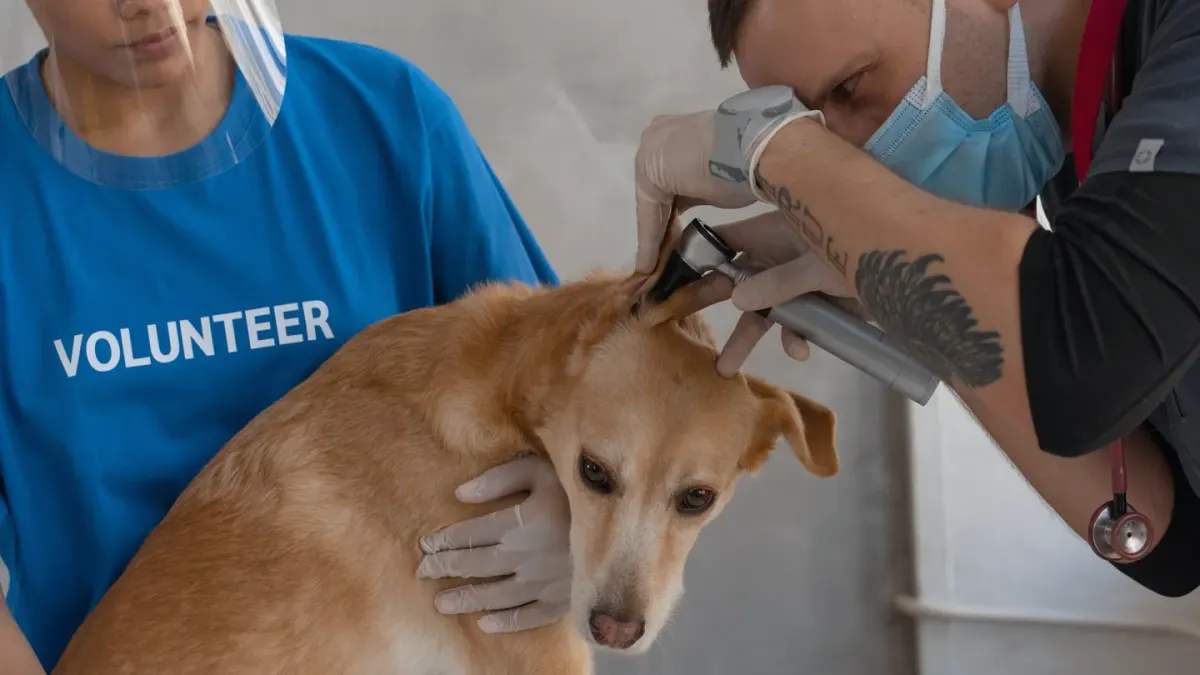
Troy in Surprise, Arizona, considered clipping his 7-year-old neutered Miniature Australian Shepherd mix Ezekiel down to the skin after finding flea dirt along his groin, hoping less hair would mean fewer fleas, yet the itching and restless scratching continued because the coat was never the reservoir that sustains the infestation.
Fleas move readily through full or short hair to feed, and the far larger population — eggs, larvae, and pupae — develops off the dog in bedding, rugs, and yard debris, which is why coat length changes visibility far more than it changes burden, a life-cycle pattern outlined by the Companion Animal Parasite Council in its flea guidelines.
Why shaving misses where fleas actually live
Adult fleas spend most of their time on the host where warmth, humidity near the skin, and capillary blood flow support feeding and reproduction, while the immature stages that may help support continued reinfestation mature in the environment, so removing hair does not remove the source.
From a nervous-system view, persistent biting drives pruritus signaling through cutaneous sensory fibers that keeps the dog in a heightened scratch-lick-chew loop, and from a whole-patient view, flea-allergic dogs develop a broader inflammatory pattern that clipping cannot settle, which is why a flea comb, a veterinarian-approved preventive, and environmental control address both the neural irritation and the underlying burden.
Clipping may briefly make fleas or flea dirt easier to see, and a veterinarian may clip a small, matted or moist-dermatitis area to examine skin and allow airflow during treatment, but a full shave does not kill fleas, does not prevent bites, and does not stop eggs from hatching in the home.
What a clipped coat loses in protection
A double coat like Ezekiel’s insulates against both heat and cold, shields skin from ultraviolet injury and mechanical trauma, and supports normal barrier and follicle cycling, so close shaving can invite sunburn, contact irritation, post-clipping alopecia or altered regrowth, and greater vulnerability to the very scratching that fleas provoke.
That loss matters especially in summer, when owners often equate short hair with cooler comfort, yet dogs release heat primarily through panting and paw pads rather than through exposed skin, a distinction discussed in Why a Senior Dog Seems More Tired in Summer Heat Than She Used To that helps explain why shade, water, and rest cool more safely than a blade.
For dogs whose itch disrupts nighttime rest, addressing the flea burden and settling an evening routine tends to help more than changing coat length, a point that parallels the approach to nighttime arousal in Why Does My Dog Pace Back and Forth at Night?.
What clears fleas on the dog and in the home
Effective control pairs consistent on-animal prevention with environmental reduction, rather than relying on grooming alone, a combined strategy emphasized for flea control in dogs by VCA Hospitals.
In practice, that plan usually includes asking your veterinarian about a labeled flea preventive suited to age, weight, health, and regional resistance patterns, treating all dogs and cats in the household on the same schedule, washing bedding in hot water, vacuuming floors, crevices, and upholstery with prompt disposal of the bag or canister contents, and rechecking with a flea comb for live fleas and salt-and-pepper dirt.
Bathing with a gentle dog shampoo may help support comfort by removing dirt and loose hair, and regular brushing may help support coat monitoring, but neither replaces a preventive, and herbal rinses, essential oils, and home clipping should not substitute for veterinary guidance, particularly in puppies, pregnant dogs, or dogs with neurologic, hepatic, or dermatologic disease.
Seek prompt veterinary care for heavy flea loads with pale gums, lethargy, hair loss with crusts or hot spots, or intense chewing that breaks skin, because anemia, flea-allergy dermatitis, tapeworms, and secondary infection require direct treatment beyond what any haircut can provide.
Frequently asked questions
Will shaving make it easier to see if fleas are gone?
Short hair can make flea dirt more visible, but only a flea comb check plus an effective preventive and cleaning routine can confirm the infestation is clearing.
Should I shave matted areas if my dog has fleas?
Do not cut mats with scissors at home; ask your veterinarian or groomer to safely clip isolated mats, treat the skin underneath, and keep the dog on flea prevention.
Sources
- Fleas — Companion Animal Parasite Council
- Flea Control in Dogs — VCA Hospitals